
As many parts of the world have already ushered in the new year, China is beginning to prepare for the Year of the Rooster/Chicken starting on January 28th, 2017 and ending on February 15th, 2018. Chinese New Year is celebrated for fifteen days (from New Year’s Eve to the Lantern Festival). The preparations traditionally start seven days before New Year’s Eve).
So it will be time to bid adieu (hòu huì yǒu qī – 后会有期) to the Year of the Monkey.
During the year many decorations featuring the monkey are seen in homes, on the streets, in malls and parks (paper cutting is particularly popular – learn to make a monkey paper cutout).
Image Credit: Songchen/China Daily
But before we do, let’s take a closer look at what the ‘monkey’ signifies.


Facts (based on the Chinese lunar calendar):
- the New Year started on Feb 8th, 2016
- monkey years are multiples of 12
- the next one will be in 2028
- the Monkey is 9th in the Animal Zodiac line-up
- it is associated with the Earthly Branch symbol 申
- according to the Chinese horoscope (source: astrology club), “The Monkey is an intelligent, witty, and inventive animal. They are problem solvers, working with their group while simultaneously demonstrating an independence associated with achievers. The nimble monkey is playful, youthful in nature, and is a joy to watch as they move from activity to activity. The monkey is one of the symbolical animals corresponding to or having affinity with the ninth of the Twelve Terrestrial Branches, called the “Shen” Branch, and symbolises irrepressible curiosity and creative energy. Though worshipped to some extent by the Buddhists, the Monkey is commonly regarded as the emblem of trickery”.
Monkey Idioms:
- Come here you little monkey (playful child)
- You’re not going to make a monkey out of me (mock or make fun of)
- It’s time to get that monkey off your back (deal with and/or solve the problem)
- Stop monkeying around (fooling around, wasting time)
- Settle down, no more monkey business (silliness and not taking the situation seriously)
- The flight cancellation put a monkey wrench into our plans (caused problems or a disruption)
- Monkey see, monkey do (someone imitating another person)
- I don’t want to wear that monkey suit (in reference to a tuxedo worn by those little organ-grinder’s monkeys)
- more fun than a barrel of monkeys (very amusing, a great deal of fun)
My first trip to China this past summer was during the Year of the Monkey, and I have to admit that I did share delightful moments of sheer fun and laughter with my fellow Canadian and local Chinese teaching colleagues – in true ‘monkey’ form, we diverted from the serious task at hand to engage in innocent, childlike behaviour – how amusing, entertaining and yes, productive it was! Could we have been affected by the playful nature of the Monkey?


Literary Significance of the Monkey:
China’s most colourful literary creation is a personified monkey, The Monkey King, from the Ming Dynasty (1368-1644). The novel, Journey to the West by Wu Cheng’en, an epic comic fantasy has received world-wide acclaim and has been translated into many different languages.


In award-winning author, Aaron Shephard‘s words, “If you think Superman or Spiderman has been around a long time, think about Monkey. He has been China’s favorite superhero for at least five centuries. He’s amazingly strong, he can fly, and he has a few tricks those other superheroes never heard of. And he’s always ready to do battle with demons, dragons—sometimes even the gods“.
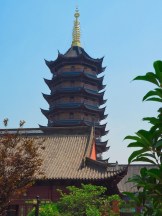
The historical city Huai’an, in Jiangsu Province, is the birthplace of Wu Cheng’en. It is the city where I and other Canadian educators participated in a cultural exchange with Chinese teachers of ESL. One of our fascinating excursions was to the residence of this renowned author as well as the art museum where illustrations and copies of his novel are displayed.
It is said that, Huai’an has long been under the spell of the Monkey King. I think my colleagues and I may have fallen under his spell too. My interest and curiosity about this legendary monkey has been piqued; so naturally, I have added this classic Chinese novel to my list of must-reads.
Happy Chinese New Year!
新年好 / 新年好 (Xīnnián hǎo)
 Traveller's Lingo